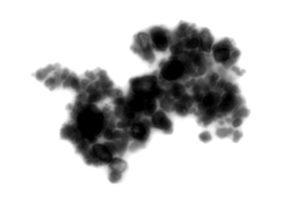
The study of subvisible particle structure—including compactness, shape variability, and the presence of dimers or aggregates—is essential for understanding particle behavior and stability over time. Particle size distribution alone is often insufficient to fully characterize these properties, as many conventional techniques assume spherical particle shapes. The SPES technology by EOS Instruments overcomes these limitations by enabling multiparametric particle analysis, providing deeper insights into samples that may share similar size distributions but differ significantly in optical and structural properties.
- detection of API encapsulation (Active Pharmaceutical Ingredients) and inclusions in drug delivery systems
- analysis of capsules, vesicles, and mesoporous particle structures
- monitoring of particle aggregation and flocculation processes
- evaluation of particle degradation, wetting behavior, and oversize evolution over time
- characterization of non-spherical particle morphology and structural variability
PARTICLE SHAPE
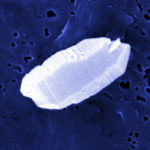 SPES / SPES² by EOS Instruments provides advanced insights into non-spherical particle characterization.
Unlike spherical particles, non-spherical structures interact differently with light scattering, resulting in variations in effective refractive index.
SPES directly measures these differences, enabling precise quantification of discrepancies between expected and measured optical properties. This allows accurate identification of deviations from ideal particle geometry and improves the reliability of particle size distribution analysis.
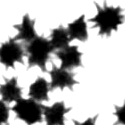
For metallic materials such as gold, silver, and platinum, SPES technology can further distinguish particles based on surface morphology and roughness, leveraging plasmonic effects. Even particles with similar size and composition can exhibit distinct optical fingerprints and be analyzed separately. Find out how
INTERNAL STRUCTURE
SPES technology by EOS Instruments enables detailed analysis of internal particle structure, including structural changes and engineered systems such as mesoporous materials, core-shell particles, and layered inclusions.
These structural variations significantly influence light scattering behavior and particle interaction. SPES technology can detect subtle differences in internal composition, providing fast and in-depth characterization of:
- core-shell particle systems
- particles containing API
- particles with internal inclusions
- mesoporous systems
- particles undergoing degradation processes
This advanced insight supports formulation optimization and improves stability and performance. The Classizer ONE™ further enhances analysis speed and reliability for industrial and R&D applications.
AGGREGATES
SPES technology by EOS Instruments enables accurate detection and characterization of particle aggregation, including clusters, flocs, and complex aggregates. By measuring differences in effective refractive index compared to well-dispersed single particles, SPES can identify aggregation phenomena and quantify their impact on particle systems. The resulting measurements of particle size and refractive index allow precise evaluation of aggregate compactness and stability, supporting formulation optimization and quality control processes.