Oil-in-water emulsions are widely used in pharmaceutical, food, cosmetic, beverage, paint, and specialty chemical applications. These systems consist of immiscible liquids dispersed as droplets, where long-term stability plays a critical role in product quality and performance.
Emulsion stability can be influenced by storage conditions, temperature, pH, surfactants, osmolarity, and mechanical stress. Instability phenomena such as coalescence and droplet growth may negatively impact formulation efficacy, safety, and product consistency.
Particle characterization is essential for formulation development, process optimization, and quality control of emulsions, liposomes, and microcapsules.
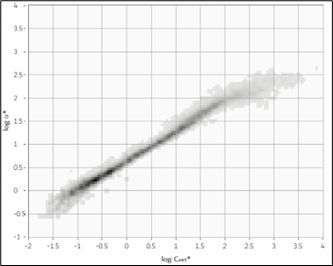
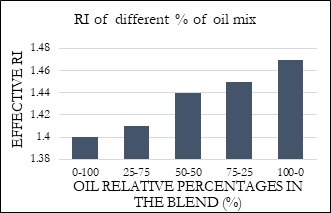
Classizer™ ONE, based on patented SPES technology by EOS Instruments, enables advanced analysis of particle size distribution, oversize populations, effective refractive index, and formulation stability.
These multiparametric measurements provide detailed physical and statistical information, helping manufacturers improve formulation performance, product consistency, and long-term emulsion stability.
-
Analyze particle size, payload, stability, and concentration of emulsions, liposomes, and capsules
-
Measure particle behavior and concentration in heterogeneous liquid systems
-
Estimate capsule shell thickness and encapsulated payload content
-
Reduce formulation development time and production costs
-
Improve formulation stability, efficacy, and product consistency
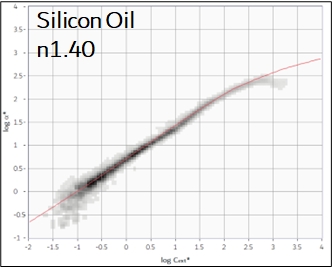
The EOS CLOUDS analysis of a silicon oil-in-water emulsion demonstrates the capability of SPES technology to accurately estimate particle refractive index values. The measured refractive index of 1.40 confirms the precision and reliability of EOS Instruments analytical software for emulsion characterization.
 Oversize study of the oil-in-water emulsion.
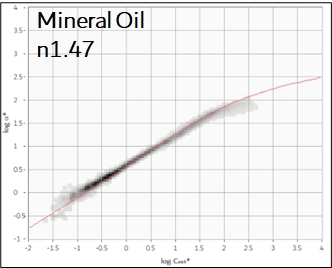
SPES technology accurately characterizes mineral oil emulsions by automatically retrieving the effective refractive index from EOS CLOUDS measurements. The measured RI value of 1.47 is consistent with expected theoretical values, supporting reliable formulation analysis and validation.
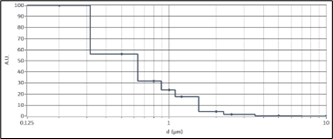 Oversize study of the oil-in-water emulsion.